
New Emerging Series: Unburdened Bodies
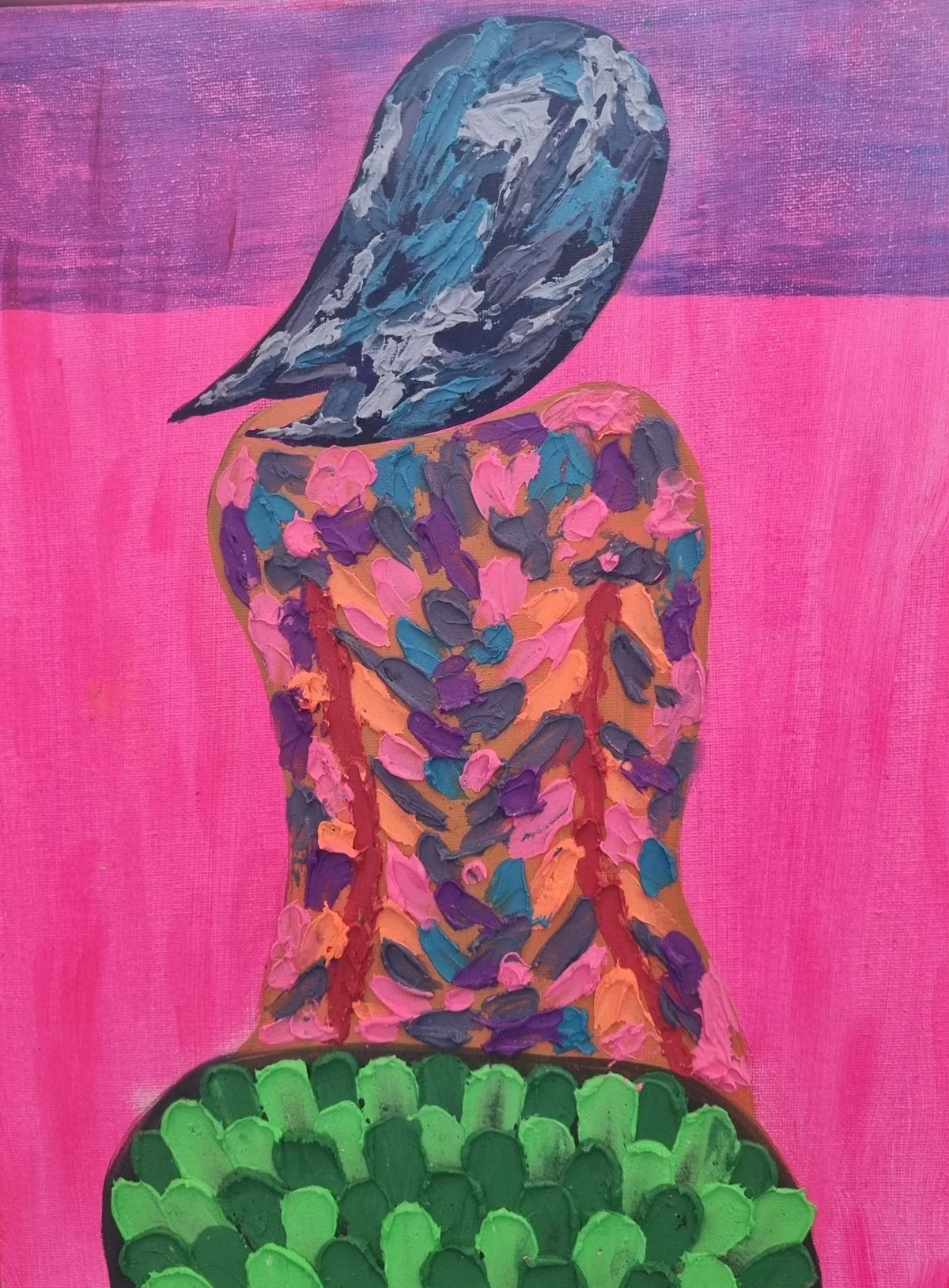
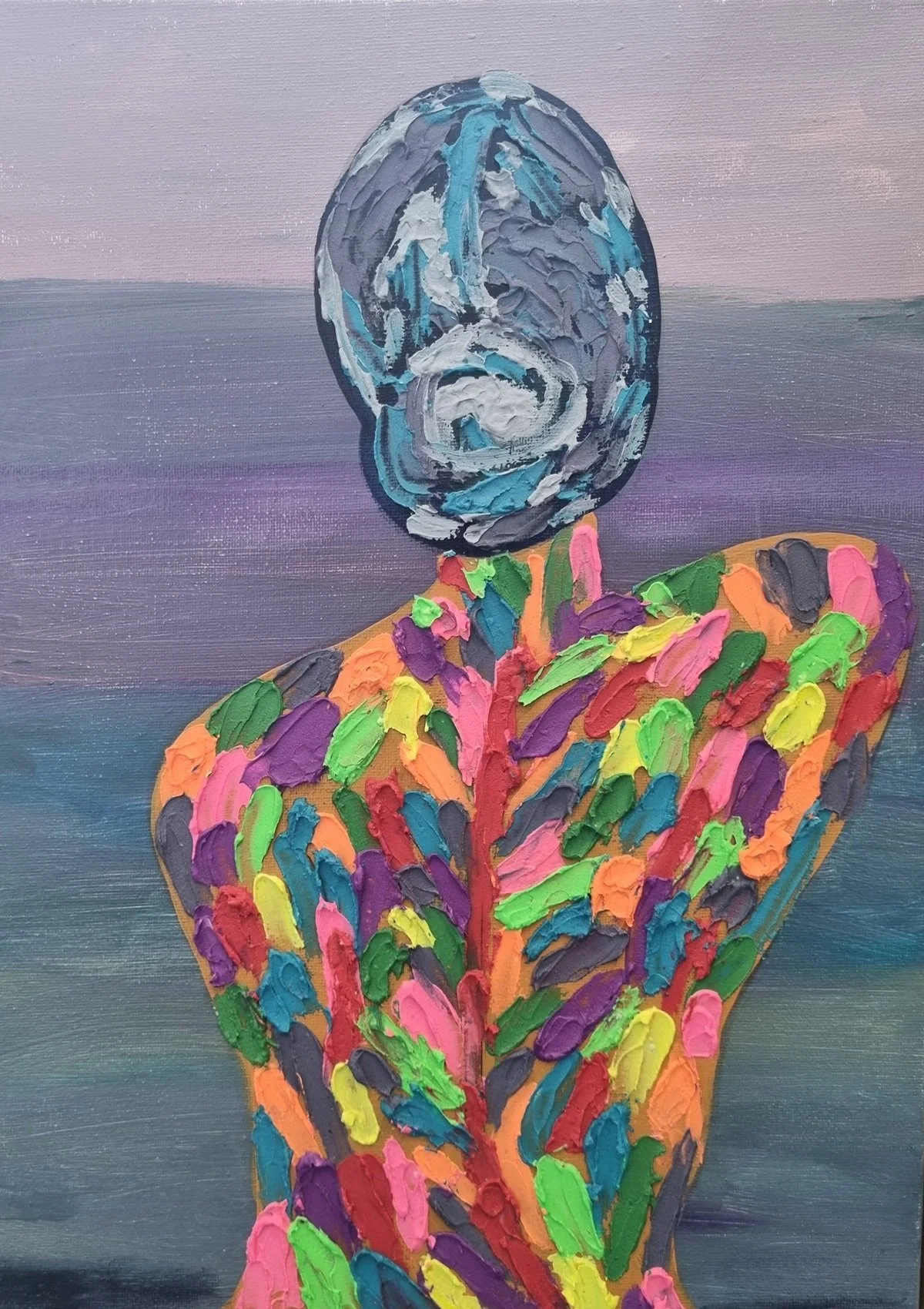
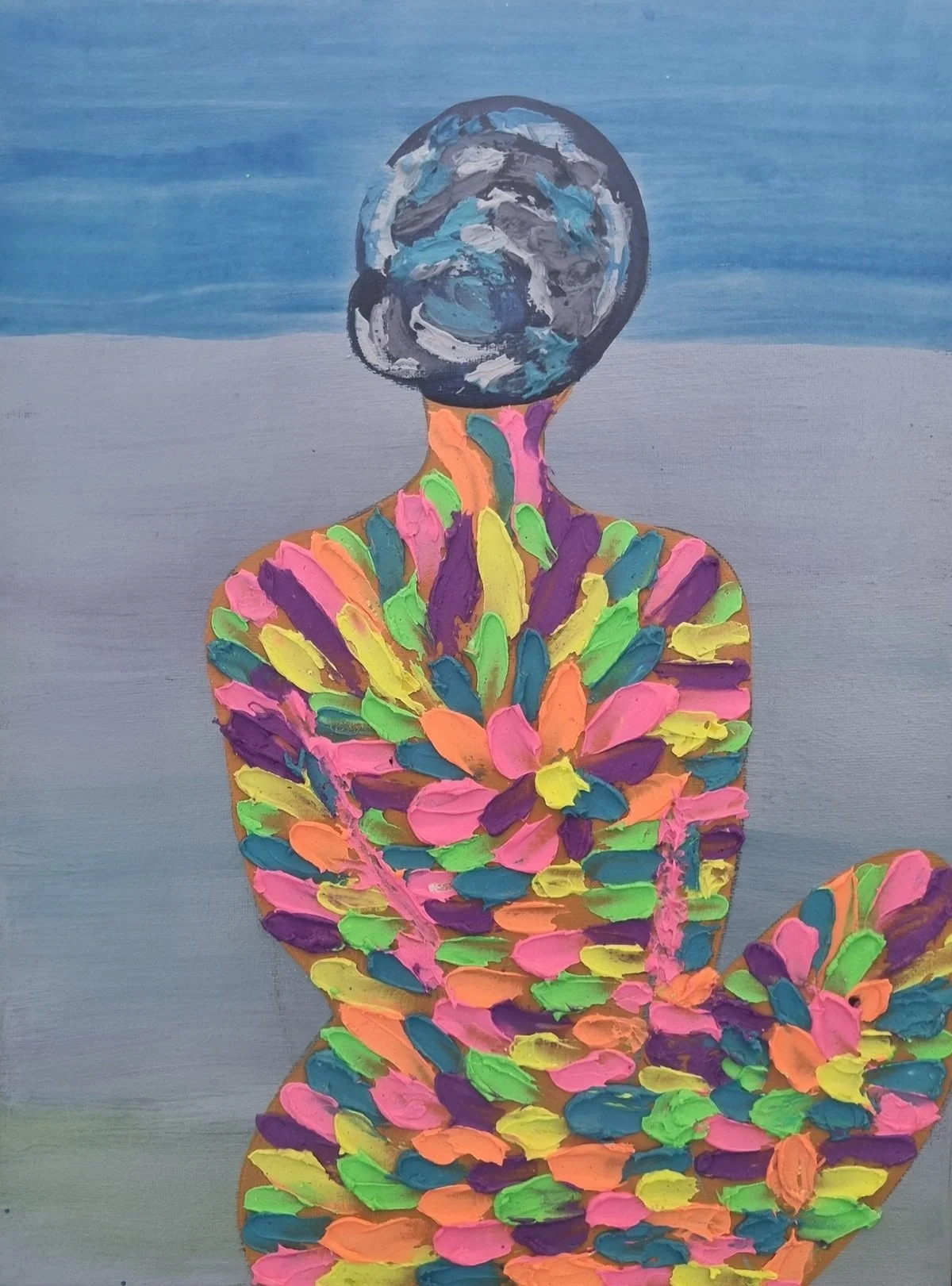
My newest body of work, Unburdened Bodies, emerges from a place of reflection — a desire to honour women’s forms not as objects of consumption, but as symbols of presence, interiority, and quiet power. The series began with painted, flattened fields of colour, onto which I sculpted women’s bodies using textured mediums. Each figure is created without voyeurism, without performance, and without the heavy cultural overlay that so often sexualises and distorts the female form. Instead, these women exist in their own worlds — unclaimed, unposed, and unburdened.
I considered naming the series feminine forms, though I wanted to represent so much more than that. I wanted to pay homage to the struggles women have faced, how we are often inextricably “tied” to our bodies, and hence our sexuality. “Unburdened bodies” as a name or title emphasises that these women are able to be grounded, feminine alongside feminist, and deeply poetic, very much aligned with values and intentions in life and in art.
The largest work in the series, measuring 36 x 48 inches and framed by Boorowa artisan Darrell Armour in reclaimed hardwood, depicts a woman seated before a blue horizon, her back open to light and air. She is both resting and watching, both grounded and expanding. There is a gentle stillness in her posture — an invitation into reflection, peace, and internal spaciousness. The smaller works (30 x 40 cm, framed in pine wood) introduce bright, fluorescent bursts of colour and textured strokes across the women’s backs, celebrating vitality, energy, and the complexity of feminine expression.
These works sit in direct conversation with the academic and creative research I completed for Rising from the Dust: (in)Visible Women in Mining, my Master of Creative Industries exegesis (SAE University College 2024) exploring sexual harassment experienced by women in mining. That project required me to sit with the ways women’s bodies are read, judged, policed, and politicised — how their presence in male-dominated spaces is often sexualised without invitation or consent. In response, this new collection becomes a reclamation: an insistence that women’s bodies can be seen as whole, dignified, sovereign, and deeply human.
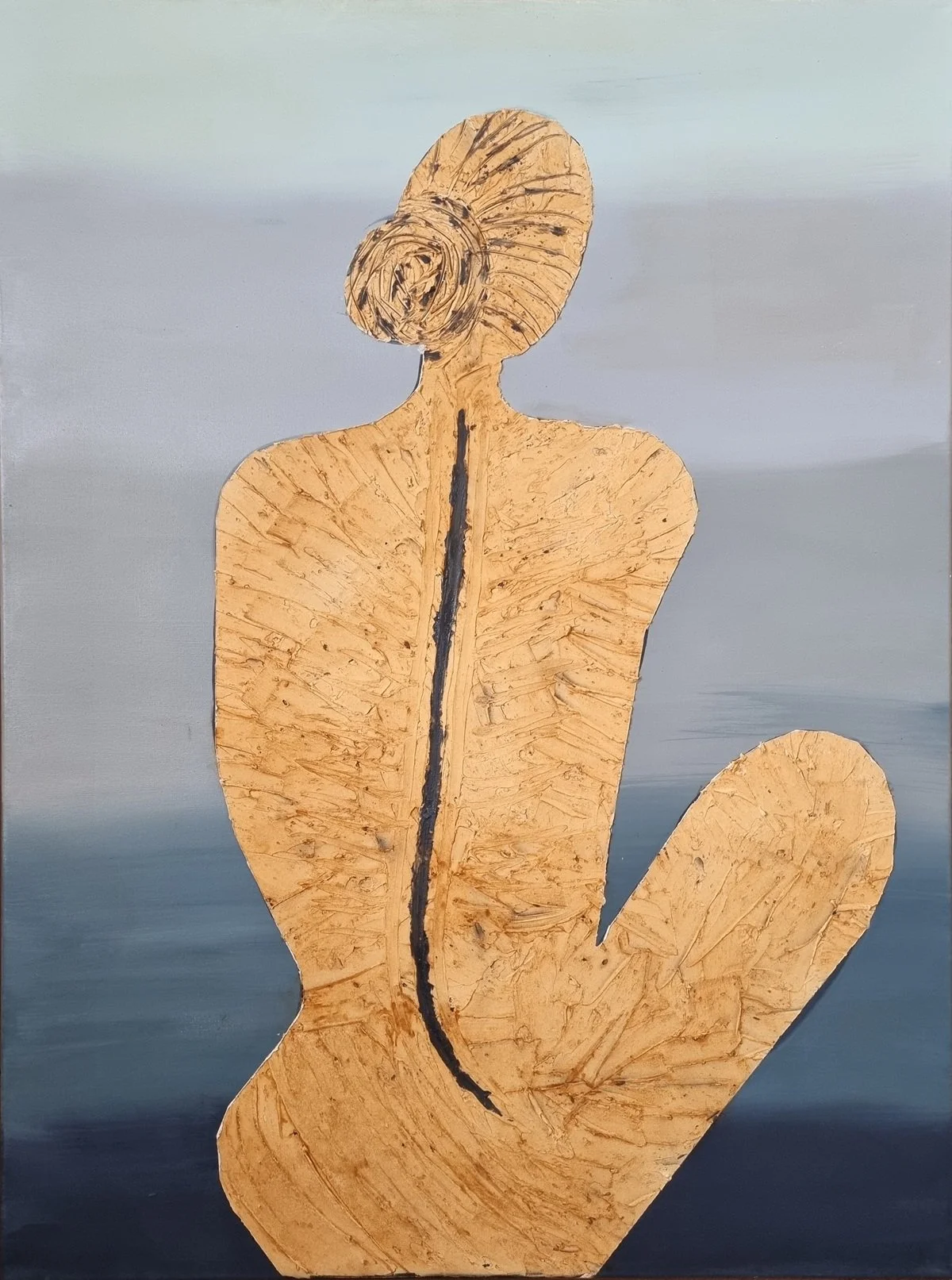
Returning to a place where we can find beauty in simply ‘being’, finding strength and stillness in ‘woman-being’ as we grapple with what it means to be a female human-being.
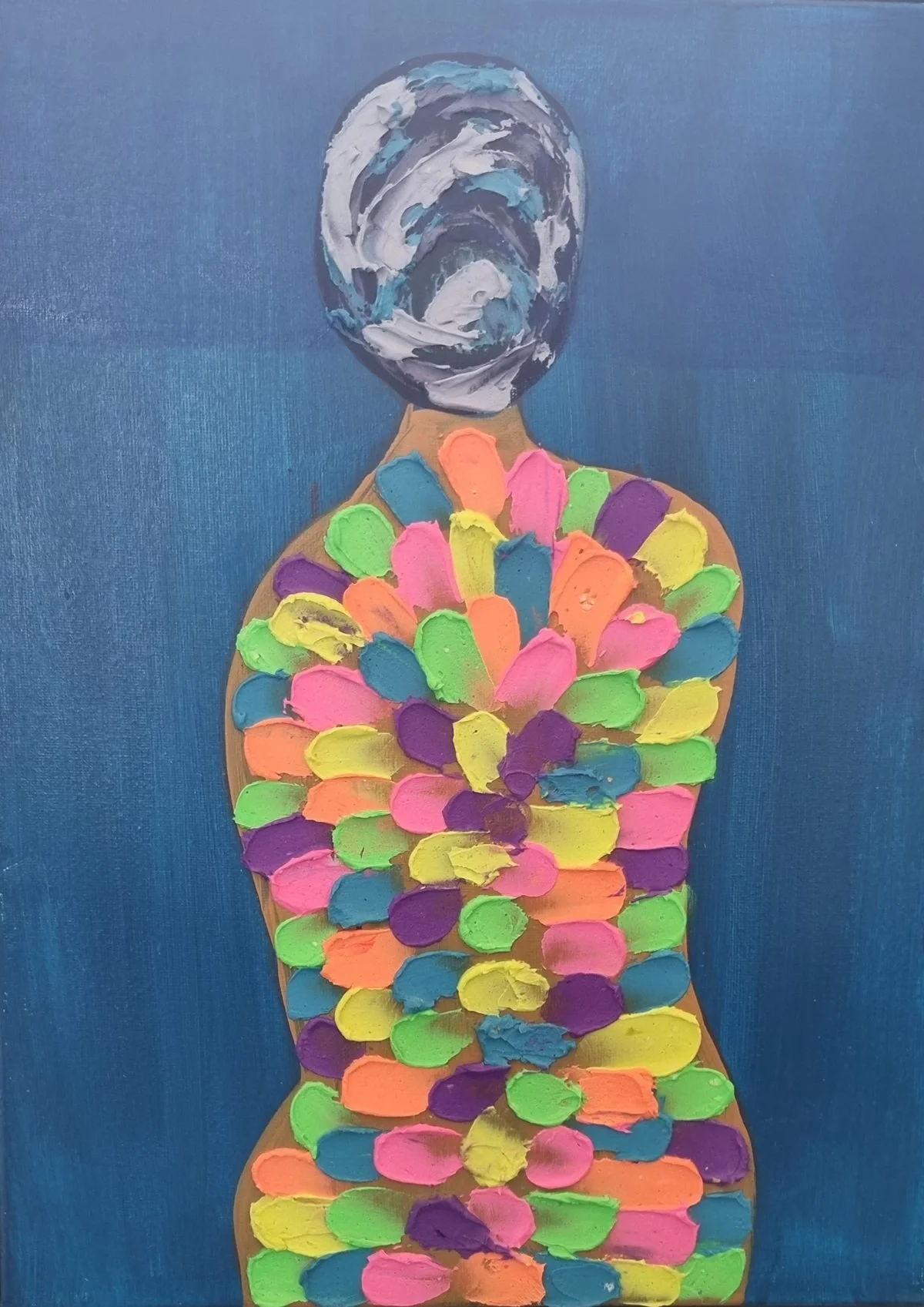
Bell Hooks argued that the female body is inherently political because it's a site where patriarchy, racism, capitalism and sexism intersect to create systems of oppression, making personal experiences like reproduction, appearance, and bodily autonomy central to feminist struggle, not separate from it. This series embraces that truth while refusing to replicate the gaze that harms. In a similar spirit, Hélène Cixous urged women to “write the body” — to tell stories through physical form in ways that restore complexity, sensuality, and selfhood. Unburdened Bodies steps into this lineage, shaping form as narrative, texture as testimony.
When describing the concept to a colleague — that I wanted to portray women without sexualising them — she smiled knowingly and said, “Oh yes… isn’t that what all women want?”
It was a moment that affirmed the heart of this work:
Women want to be seen, not consumed.
To be witnessed, not objectified.
To be represented, not reduced.
This series is my offering toward that representation — a gentle, feminist honouring of women’s presence, interiority, and resilience. A celebration of feminine energy without spectacle. A quiet protest against the assumption that a woman’s body exists for external pleasure.
Here, women simply are.
And that is enough.
References & Links:
Cixous, H., Cohen, K., & Cohen, P. (1976). The laugh of the Medusa. Signs: Journal of Women in Culture and Society, 1(4), 875-893. http://www.jstor.org/stable/3173239
Hooks, B. (2000). Feminism is for everybody : passionate politics. South End Press.
Hooks, B. (1995). Art on my mind : visual politics. New Press.

Connect with Ang
Never miss a moment in the world of Ang Hart. Get studio updates, new artwork releases and updates on commission openings delivered straight to your inbox.
